
Greek and Italian Memorial Headstones Explained
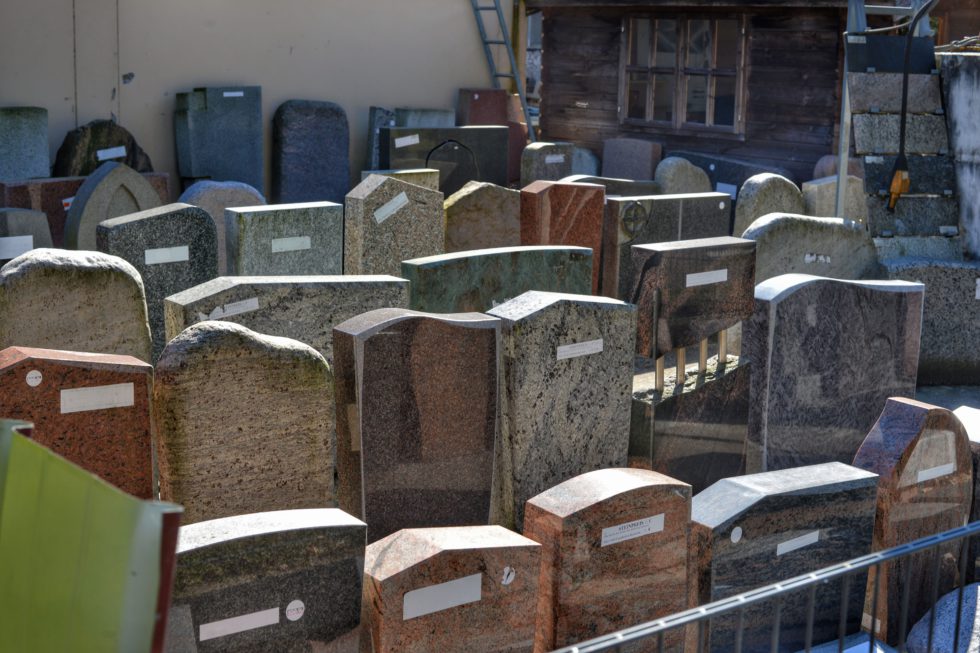
Greek Orthodox Headstones are often designed to reflect the religious beliefs, cultural traditions and family heritage of the person being remembered. While individual memorials vary considerably, they may feature Orthodox crosses, religious imagery, icons, inscriptions in Greek or English, photographs and carefully selected stonework. Families often personalise these memorials to honour both the individual and traditions that remain important across generations.
Italian Memorial Headstones can similarly reflect a strong connection to family, faith and cultural heritage. Depending on personal preferences and cemetery requirements, these memorials may incorporate Catholic crosses, images of saints, portraits, decorative carvings, vases or inscriptions in Italian and English. Some families choose substantial monuments designed to commemorate several members of the family, while others prefer simpler individual headstones.
Both styles are commonly produced by experienced monumental stonemasons, who specialise in designing, carving, lettering and installing cemetery monuments. These craftspeople work with families to select suitable materials, determine dimensions and develop inscriptions and decorative elements. They must also ensure the completed memorial complies with the regulations of the cemetery where it will be installed.
What Makes the Styles Different?
There is no single design that defines every Greek or Italian memorial. Cultural traditions can influence the appearance, but personal preferences, religion, cemetery regulations and family history are equally important.
Greek Orthodox memorials frequently incorporate symbols associated with Orthodox Christianity. Crosses and religious imagery can form prominent parts of the design, while Greek lettering may be used for names, prayers or commemorative messages.
Italian memorial traditions are also diverse. Catholic imagery may feature prominently for religious families, while photographs, floral designs and personalised inscriptions can create a strong connection to the individual being commemorated.
Materials Used for Memorials
Granite is one of the most widely used materials for modern cemetery monuments because of its strength, durability and range of available finishes. Different granite colours can create dramatically different appearances, from traditional dark polished monuments to lighter and more contemporary designs.
Marble has also historically been associated with memorial architecture and sculpture. However, material selection should consider the local environment, desired appearance, maintenance requirements and cemetery regulations.
Personalising a Headstone
Personalisation allows a memorial to tell more of an individual’s story. In addition to the person’s name and dates of birth and death, families may include photographs, religious symbols, meaningful verses and decorative artwork.
Modern stoneworking techniques allow detailed images and lettering to be incorporated into granite. Traditional hand-carving and stone masonry techniques can also be used where a particular style or finish is desired.
Who Makes and Installs Headstones?
Creating a memorial requires specialised skills. A stonemason must accurately cut and finish the stone, create lettering and decorative elements, and prepare the monument for safe installation.
Before manufacturing begins, the stonemason will generally discuss the design with the family and check the requirements of the relevant cemetery. Cemeteries can have rules covering monument dimensions, materials, foundations and installation procedures.
Installation is also an important part of the process because headstones and larger monuments can be extremely heavy. Proper foundations and professional installation help provide stability and longevity.
Creating a Lasting Memorial
The main difference between Greek Orthodox and Italian memorial headstones is not necessarily the stone itself, but the cultural, religious and personal traditions expressed through the design. Both can range from simple headstones to elaborate family monuments.
Working with an experienced memorial stonemason allows families to combine these traditions with individual preferences. The result can be a durable and meaningful monument that honours a loved one while preserving elements of family, faith and cultural heritage for future generations.